Otosclerosis is a condition in which abnormal bone growth in the middle ear stiffens the stapes, the tiny stirrup-shaped bone that passes sound to the inner ear. The result is a slowly worsening conductive hearing loss, usually starting in one ear and often reaching the other. It runs in families and affects women about twice as often as men. It cannot be reversed with medicine, but hearing can be restored with a stapes operation (stapedotomy or stapedectomy) or with a well-fitted hearing aid, and both work well for most people.
Otosclerosis tends to show up in people in their 20s, 30s and 40s, which makes it different from age-related hearing loss. A young mother notices she keeps missing what her children say. A man in his 30s turns the TV up and his family complains. Because the hearing nerve is usually healthy, the outlook is good. The real question is which route suits you: surgery, a hearing aid, or one and then the other. This guide covers both honestly, along with the five hearing aids we fit most often for otosclerosis.
At a Glance
- Otosclerosis: the stapes bone in the middle ear gets fixed in place by abnormal bone, so sound cannot pass well to the inner ear.
- Main symptom: gradual hearing loss, often low pitches first, with tinnitus in many people. About 70% end up with it in both ears.
- More common in women, often noticed between 20 and 45, and more than half of patients have a family history.
- Treatment: stapes surgery (about ₹60,000 to ₹2.5 lakh in India) or hearing aids. Medicines like sodium fluoride may slow it but do not cure it.
- Hearing aids work very well for otosclerosis because the inner ear is usually healthy and only needs more volume.
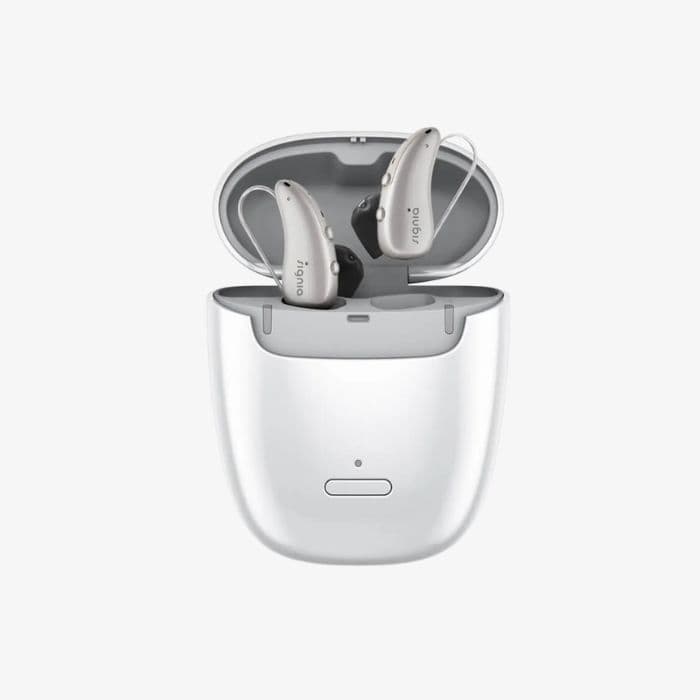
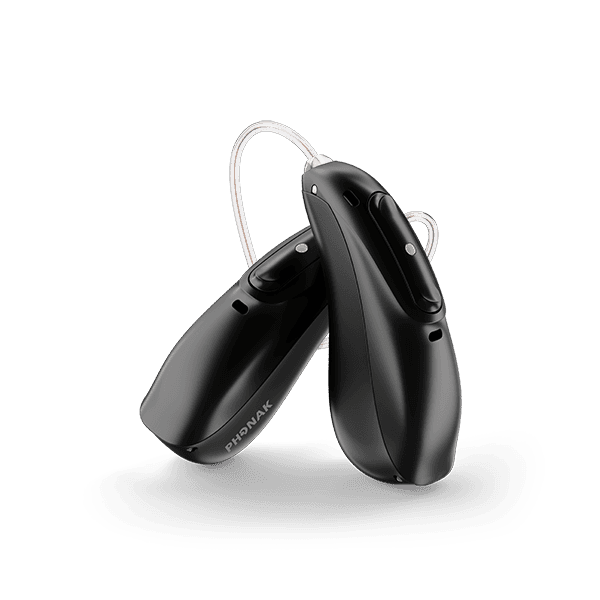
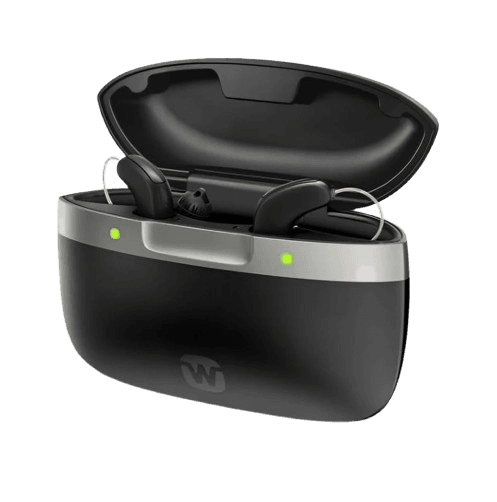
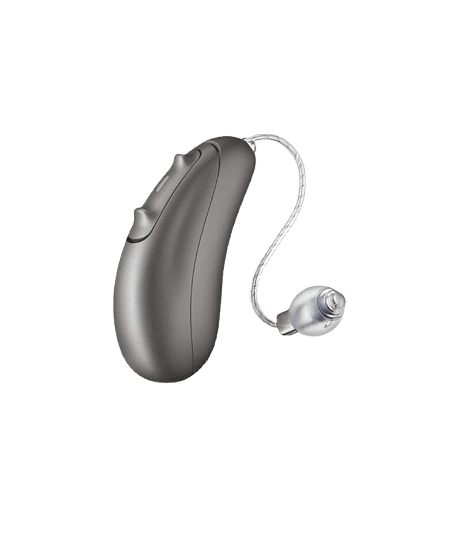
- Our top 5 hearing aids for otosclerosis: Signia Pure Charge&Go IX, Phonak Audéo Infinio, Signia Motion Charge&Go IX, Oticon Intent and Signia Orion Charge&Go (budget).
What Is Otosclerosis?
Sound travels through the ear in three stages. The ear drum vibrates, three tiny bones in the middle ear (malleus, incus and stapes) pass the vibration along, and the stapes pushes it into the fluid of the cochlea through a small window. In otosclerosis, spongy new bone forms around the base of the stapes and slowly locks it in place. A stiff stapes moves less, so less sound gets in.
This makes otosclerosis a conductive hearing loss: the inner ear and hearing nerve still work, but sound is blocked on the way. That is the opposite of sensorineural hearing loss, where the inner ear itself is damaged. In some people the abnormal bone also spreads into the cochlea (cochlear otosclerosis) and adds a sensorineural part, giving a mixed loss. Our guide to types of hearing loss explains the difference in more detail.

Who Gets Otosclerosis and What Causes It?
The exact cause is still not fully known, but a few patterns are clear:
- Genes: more than half of people with otosclerosis have a relative with it. It often appears earlier when it runs in the family.
- Sex: women are affected about twice as often as men.
- Age: the bone changes usually start in the 20s or 30s, and hearing loss becomes noticeable between about 20 and 45.
- Pregnancy: many women first notice the loss, or find it gets worse, during or after pregnancy. Recent research suggests this link may be weaker than once believed, but it is still worth getting your hearing tested if it changes around pregnancy.
- Other factors under study: measles virus infection and hormone changes have been linked to it, but none is proven as the cause.
Otosclerosis is not caused by loud noise, ear infections or anything you did, and it is not contagious.
Symptoms of Otosclerosis
- Slow hearing loss over months or years, often in one ear first.
- Low and soft sounds go first: deep voices, footsteps, the hum of a fan.
- Your own voice sounds louder inside your head, so you may start speaking softly.
- Some people hear speech better in a noisy place than in a quiet room. Doctors call this paracusis of Willis.
- Tinnitus: ringing, buzzing or a low hum in the ear.
- Less often, dizziness or balance problems.
No pain, no discharge and a normal-looking ear drum are typical. That is why otosclerosis is often missed until someone has a proper hearing test.
How Otosclerosis Is Diagnosed
An ENT doctor will look in the ear, which usually appears normal, and do tuning fork tests. The key test is a pure tone audiogram. It shows a gap between air conduction (sound through the ear canal) and bone conduction (sound through the skull). A small dip in bone conduction around 2,000 Hz, called the Carhart notch, is a classic sign. Tympanometry often shows a stiff middle ear, and the stapedial reflex is usually absent. A high-resolution CT scan of the temporal bone can confirm the diagnosis and show whether the cochlea is involved.
Hearwell clinics do the full audiogram and middle-ear tests. If the pattern points to otosclerosis, we will tell you and send you to an ENT surgeon for an opinion before any hearing aid decision.
Otosclerosis Treatment: Surgery vs Hearing Aid
There is no medicine that reverses otosclerosis. Sodium fluoride and, in some cases, bisphosphonates are used to try to slow it, especially when the cochlea is involved, but the evidence is mixed. In practice, the choice is between surgery and a hearing aid.
Stapes surgery (stapedotomy or stapedectomy)
Under a microscope, the surgeon removes part or all of the stiff stapes and replaces it with a tiny piston-shaped prosthesis. It is usually done on the worse ear first, often as a day case or with a one-night stay. Around 90 percent of people get a clear improvement in hearing, and many no longer need a hearing aid in that ear. The main risk is that, in a small number of cases (commonly quoted at about 1 percent), the inner ear is damaged and hearing in that ear gets worse or is lost. Short-term dizziness, taste changes and tinnitus can also happen.
Hearing aids
Because the inner ear is usually healthy, otosclerosis responds very well to amplification. A modern aid simply supplies the extra volume the stiff bone is blocking, and speech tends to sound clear. There is no surgical risk, you can try one before you buy, and you can still choose surgery later. Hearing aids are often the better choice if you have otosclerosis in your only hearing ear, have a mixed loss, are not fit for surgery, or simply prefer not to have an operation.
| Stapes surgery | Hearing aid | |
|---|---|---|
| How it works | Replaces the stiff stapes with a prosthesis | Amplifies sound past the stiff bone |
| Typical result | Clear gain in about 90% of people | Good speech clarity when well fitted |
| Risk to hearing | Small risk (about 1%) of inner ear damage | None |
| Trial first | No | Yes, at home |
| Cost in India | About ₹60,000 to ₹2.5 lakh per ear | About ₹33,000 to ₹4.2 lakh per ear (our top 5) |
| Best for | Pure conductive loss, healthy inner ear, fit for surgery | Mixed loss, only-hearing ear, or no surgery wanted |
Surgery costs vary by hospital and technique. Yashoda Hospitals, for example, quotes ₹60,000 to ₹1,00,000 for a conventional stapedectomy and up to about ₹2.5 lakh for laser, revision or both-ear surgery. Hearing aid prices for every brand are in our hearing aid price guide.

Top 5 Hearing Aids for Otosclerosis in India (2026)
For otosclerosis we look for strong low-frequency gain, a receiver or ear hook that can deliver it, and a fitting that can be adjusted as the loss changes over the years. Signia and Phonak come first because they are the two brands Hearwell focuses on. Prices are MRP per ear from the 2026 brand price lists.
| # | Model | Type | Best for | Price per ear (₹) |
|---|---|---|---|---|
| 1 | Signia Pure Charge&Go IX | RIC, rechargeable | Most otosclerosis, busy social life | 77,990 to 3,89,990 |
| 2 | Phonak Audéo Infinio | RIC, rechargeable | Phone calls on any phone | 89,000 to 3,47,000 |
| 3 | Signia Motion Charge&Go IX | BTE, rechargeable | Mixed or more severe loss | 72,990 to 3,64,990 |
| 4 | Oticon Intent | RIC, rechargeable | Natural, open sound | 2,55,000 to 4,25,000 |
| 5 | Signia Orion Charge&Go | RIC, rechargeable | Budget pick | 32,990 to 42,990 |
1. Signia Pure Charge&Go IX

Pure IX is our first choice for most people with otosclerosis. It is small and rechargeable, and its receivers come in several power levels, so the same aid can follow a loss that grows over the years. Signia’s IX platform keeps several voices in focus in a group, which suits the working age group otosclerosis usually affects. Prices run ₹77,990 to ₹3,89,990 per ear. Compare the levels in our Signia price guide.
2. Phonak Audéo Infinio

Audéo Infinio connects to almost any Bluetooth phone, Android or iPhone, and works as a hands-free headset. For a young parent or a working professional with otosclerosis, that matters every day. Sound is clean and the fitting is easy to fine-tune. It costs ₹89,000 to ₹3,47,000 per ear. Our Phonak price guide lists every level.
3. Signia Motion Charge&Go IX

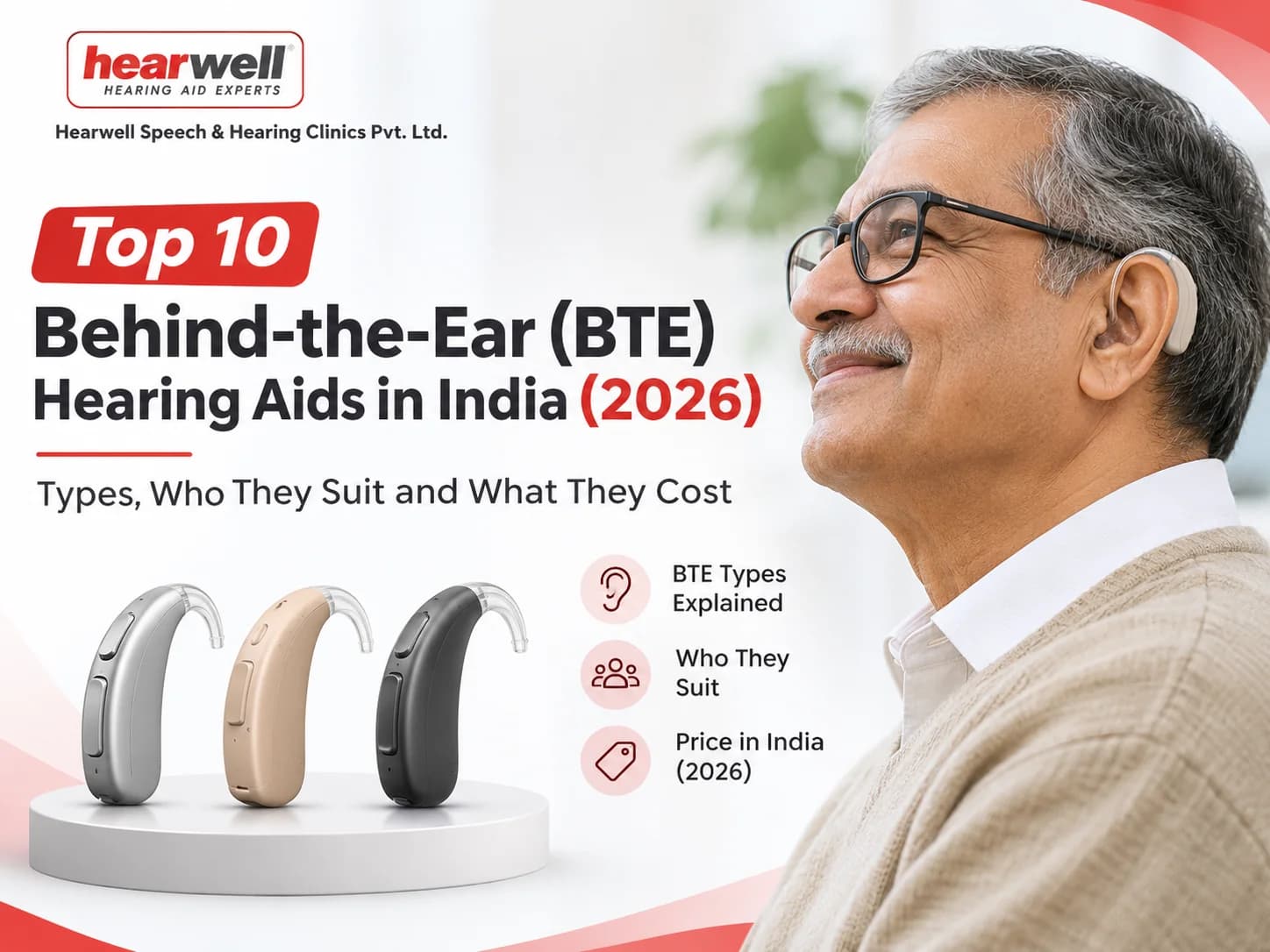
When otosclerosis has spread to the cochlea, or the loss is simply larger, a behind-the-ear aid with more power is the safer fit. Motion IX comes in M, P and SP sizes up to a 120 dB fitting range, is rechargeable and has an easy push button. It runs ₹72,990 to ₹3,64,990 per ear. See more power options in our top 10 BTE hearing aids.
4. Oticon Intent

Intent uses motion sensors to work out who you are listening to and keeps the rest of the room audible, so sound feels open and natural. People who dislike the closed-in feeling of some aids often like it. It is a premium family, ₹2,55,000 to ₹4,25,000 per ear. Our Oticon price guide covers cheaper Oticon options too.
5. Signia Orion Charge&Go (best on a budget)

Orion gives you a rechargeable RIC from a major brand at an entry price of ₹32,990 to ₹42,990 per ear. It has fewer channels and features than the aids above, but for a straightforward conductive loss it does the job well, and it is a sensible way to try a hearing aid before deciding on surgery. Our top 10 RIC hearing aids list has more choices.
Living With Otosclerosis: Practical Tips
- Get a hearing test every year. Otosclerosis can progress, and the fitting should keep up with it.
- If you are planning a pregnancy, tell your ENT doctor. Some medicines used for otosclerosis are not safe in pregnancy.
- If you have surgery on one ear, a hearing aid can still help the other ear while you decide about it.
- Ask your family to get tested if they notice hearing changes, since otosclerosis often runs in families.
- Do not wait for the loss to get worse. Long-term untreated hearing loss makes listening harder and more tiring.
If otosclerosis has progressed a long way and both surgery and hearing aids no longer give clear speech, a cochlear implant may become an option. That is rare, and our cochlear implant vs hearing aid guide explains when it applies.
Get Tested at Hearwell
Hearwell clinics test your hearing, check the middle ear, and fit Signia, Phonak, Oticon and other hearing aids to your audiogram, with a 7-day home trial. Visit us in Jalandhar, Phagwara, Kapurthala, Ludhiana, Bathinda, Mohali, Patiala or Jammu, or contact us to book. You can also compare models in our compare tool or read Signia vs Phonak.
Frequently Asked Questions

What is otosclerosis?
Otosclerosis is abnormal bone growth in the middle ear that fixes the stapes bone in place. Because the stapes cannot move freely, less sound reaches the inner ear, causing a gradual conductive hearing loss.
What are the first symptoms of otosclerosis?
Slowly worsening hearing in one or both ears, often low and soft sounds first, tinnitus, your own voice sounding loud, and sometimes hearing better in noisy places than in quiet ones. The ear usually looks normal.
Can otosclerosis be cured without surgery?
No medicine reverses otosclerosis. Sodium fluoride may slow it in some cases. Hearing can be restored without surgery by using a hearing aid, which works well because the inner ear is usually healthy.
What is the cost of otosclerosis surgery in India?
Stapedectomy or stapedotomy costs about ₹60,000 to ₹1,00,000 for a conventional operation in India, and up to about ₹2.5 lakh for laser, revision or both-ear surgery, depending on the hospital.
Is a hearing aid or surgery better for otosclerosis?
Both work well. Surgery gives a clear hearing gain in about 90 percent of people but carries a small risk to the inner ear. A hearing aid has no risk and can be tried first. Hearing aids are often preferred for mixed loss, an only-hearing ear, or when surgery is not wanted.
Which hearing aid is best for otosclerosis?
Our top picks for 2026 are Signia Pure Charge&Go IX, Phonak Audéo Infinio, Signia Motion Charge&Go IX for larger or mixed loss, Oticon Intent, and Signia Orion Charge&Go as a budget option.
Does otosclerosis get worse in pregnancy?
Many women first notice otosclerosis or find it worsens around pregnancy, though recent research suggests the link may be weaker than once thought. Get a hearing test if your hearing changes, and tell your doctor before taking any otosclerosis medicine.
Can otosclerosis cause deafness?
Complete deafness is rare. Most people have a moderate conductive loss. If the disease spreads to the cochlea, it can cause a larger mixed loss, but hearing aids or surgery help in most cases.
Think You Might Have Otosclerosis?
Book a free hearing test at any Hearwell clinic. We will check your audiogram and middle ear, explain whether a hearing aid or an ENT opinion on surgery makes more sense, and let you try a hearing aid at home for 7 days.
Call: +91 8556086888 | WhatsApp: wa.me/+918556086888 | Find your nearest Hearwell clinic