“It’s only mild” is what most people hear after their first hearing test, and many take it to mean nothing needs doing. Then the same person keeps missing what colleagues say in meetings, turns the TV up a little more each month and nods along at family dinners. Mild hearing loss is easy to ignore precisely because it does not stop you hearing in a quiet room.
This guide explains what mild hearing loss actually means, what the evidence says about treating it, which hearing aid styles suit it, and what those aids cost in India on the 2026 price lists, with Signia and Phonak first and the other major brands after.
At a Glance
- Mild hearing loss means an average loss of roughly 20 to 35 dB under the WHO’s 2021 grades, or 26 to 40 dB under the older scale many Indian clinics still use.
- The typical sign is not silence but struggle in noise: restaurants, meetings, soft or distant voices, and words with s, f and th sounds.
- A review of studies on adults with mild loss concluded they “should expect to receive benefit from hearing aids”.
- Small open-fit receiver-in-canal (RIC) aids are the usual choice. Entry models start around ₹30,000 to ₹45,000 a unit; Signia Pure C&G IX starts at ₹77,990 and Phonak Audéo Lumity at ₹79,000.
- Mild loss rarely needs a premium level unless your days are spent in noisy, busy places.
What Counts as “Mild”?
Hearing loss is graded by the average threshold across the main speech frequencies, measured in decibels (dB) on an audiogram. In its World Report on Hearing (2021), the WHO set mild loss at 20 to under 35 dB in the better ear. Many clinics in India, and the Hearwell hearing needs guide, still use the older band of 26 to 40 dB. Either way, it is the first step above normal hearing.
The WHO’s description of this grade is telling: a person with mild loss usually has no trouble with conversation in quiet but may struggle in noise. Most mild losses also start in the high frequencies, which carry consonants like s, f, th and sh. So you hear that someone is speaking, but parts of words drop out. Our longer explainer on types and causes of hearing loss covers where this comes from, including age and noise.

Common signs of mild hearing loss
- You follow one person in a quiet room, but lose the thread in a restaurant or a family gathering.
- Women’s and children’s voices are harder to catch than deeper voices.
- You ask people to repeat themselves, or guess and nod.
- The TV or phone volume creeps up, and family comments on it.
- You feel tired after meetings or long conversations from the effort of listening.
Do You Really Need a Hearing Aid for Mild Hearing Loss?

Not everyone with a mild audiogram wants or needs aids straight away, and a good audiologist will not push you. The useful question is how much the loss gets in your way. A teacher, a salesperson or a manager who spends the day in conversation will notice mild loss far more than someone with a quiet routine.
The evidence for treating it is reasonable. A 2016 systematic review by Johnson and colleagues in the Journal of the American Academy of Audiology looked at adults with mild sensorineural loss and concluded they “should expect to receive benefit from hearing aids”, including people whose loss is only in the high pitches. Researchers also continue to study hearing and memory. The ACHIEVE trial, published in The Lancet in 2023, followed 977 adults aged 70 to 84 with mild to moderate loss for three years. Hearing care did not slow cognitive decline in the group as a whole, but in participants at higher risk it slowed decline by 48 percent. That is a promising finding, not a guarantee, and our article on hearing loss and dementia explains the link in more detail.
One caution: cheap “hearing amplifiers” sold online simply make everything louder. A hearing aid is programmed to your audiogram, boosting only the pitches you have lost. With mild loss that difference matters, because too much low-pitch boost sounds boomy and unnatural, and people give up on it.
Which Style Suits Mild Loss Best?
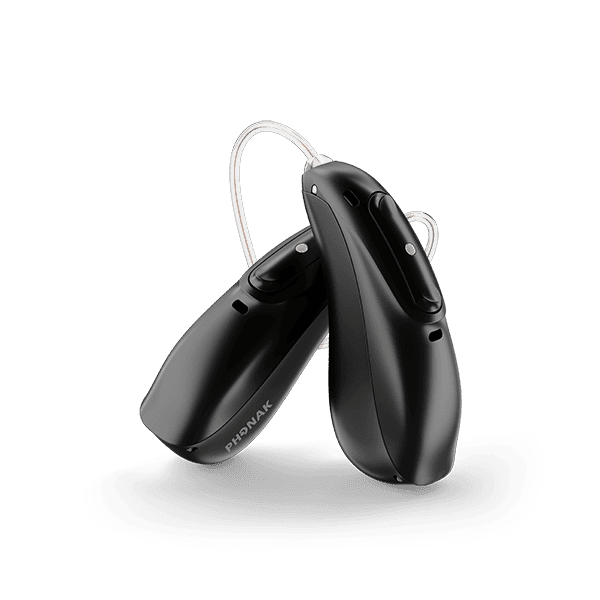
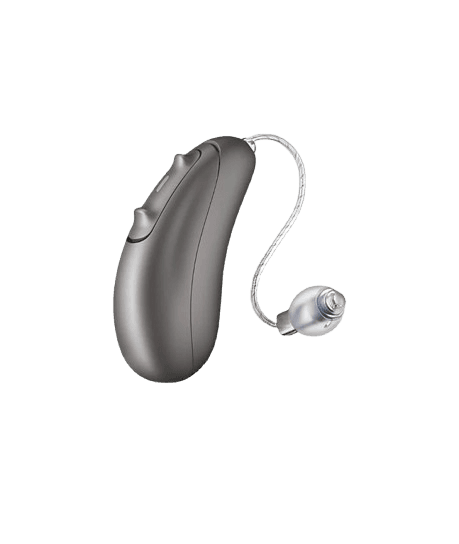
For most people the answer is an open-fit receiver-in-canal (RIC) hearing aid. The small body sits behind the ear, a thin wire carries sound to a tiny speaker in the canal, and an open dome leaves the canal mostly unblocked. Your natural low-pitch hearing still comes through, the aid adds only the high pitches you are missing, and your own voice does not sound hollow. Most RIC models today are also rechargeable and stream calls from your phone over Bluetooth.

If appearance matters most, custom CIC and IIC aids sit inside the canal and suit mild loss well, provided your ear canal is large enough. Our guide to invisible hearing aids explains the trade-offs. A BTE is rarely needed for mild loss unless dexterity is an issue.
What Hearing Aids for Mild Hearing Loss Cost in India
The table lists models an audiologist would commonly consider for mild loss, from the brands’ 2026 price lists. Prices are per unit unless stated. Most people need two aids, and some brands sell a cheaper pair kit.

| Brand and model | Style | Price on 2026 list (₹) |
|---|---|---|
| Signia Orion Charge&Go | RIC, rechargeable (charger ₹4,490 extra) | 32,990 to 42,990 |
| Signia Insio 1NX | Custom CIC | 44,990 |
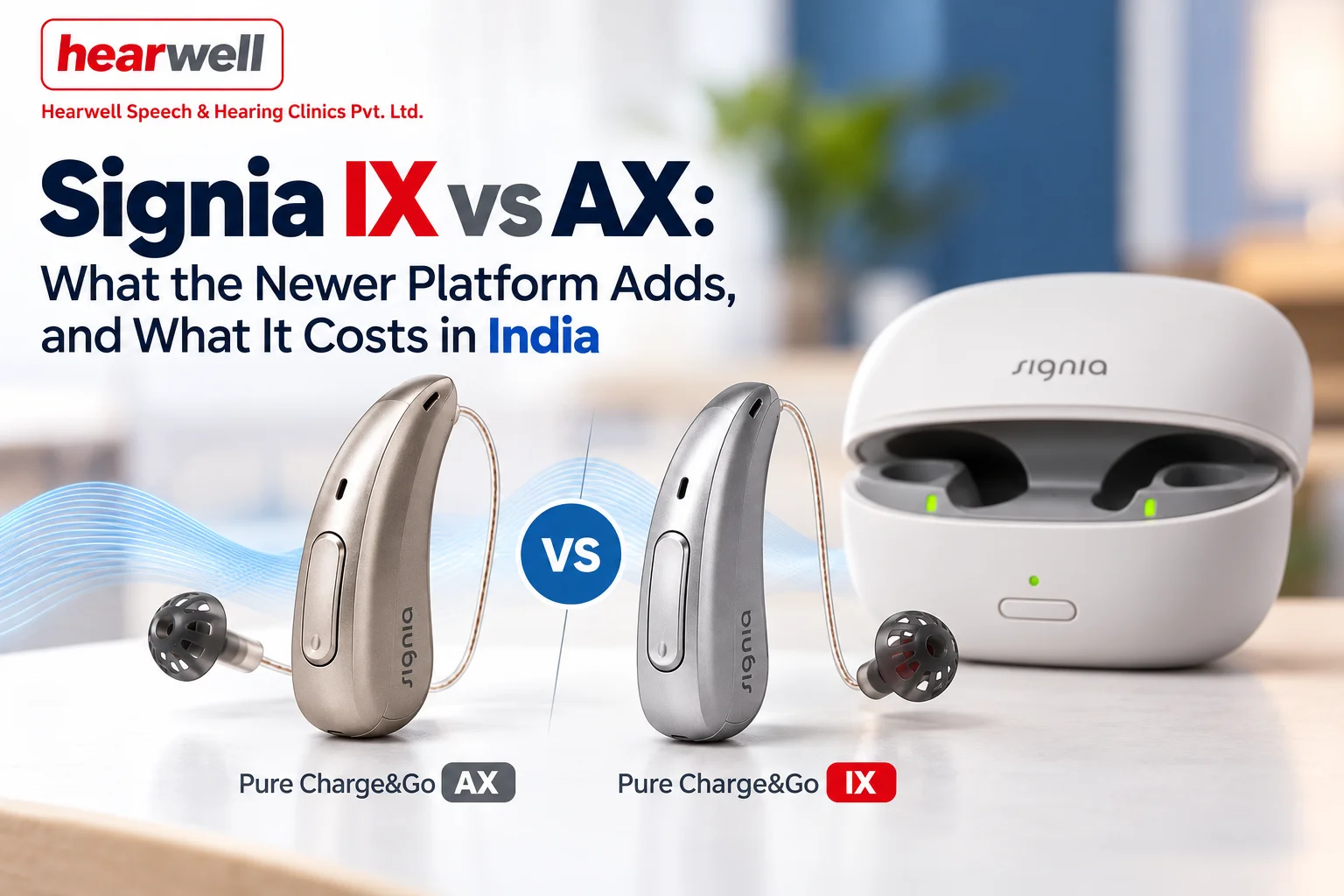
| Signia Pure Charge&Go AX | RIC, rechargeable | 72,990 to 3,80,990 |
| Signia Pure Charge&Go IX | RIC, rechargeable | 77,990 to 3,89,990 (kit 1,44,990 to 7,69,990) |
| Phonak Terra | RIC-312, battery | 33,000 |
| Phonak Terra+ | RIC-312 battery / RIC-R rechargeable | 42,000 / 62,000 |
| Phonak Virto P30 | Custom CIC (NW0) | 55,000 |
| Phonak Audéo Lumity (L-R) | RIC, rechargeable | 79,000 to 3,25,000 (kit 1,38,000 to 6,30,000) |
| Phonak Audéo Infinio (I-R) | RIC, rechargeable | 89,000 to 3,47,000 (kit 1,54,000 to 6,70,000) |
| ReSound Key 361 | RIE, battery | 30,495 |
| Oticon Jet 2 | miniRITE | 32,000 |
| Bernafon Entra A1 | Entry level, several styles | 26,990 |
| Starkey Picasso 1000 | Custom CIC | 25,000 |
Full breakdowns are in our Signia price guide and Phonak price guide, and the hearing aid price guide for India covers every brand. For the difference between Signia’s two current platforms, see Signia IX vs AX, and for Signia’s newest launch, our Signia MaX guide.
Entry Level or Premium for Mild Loss?
Higher technology levels mainly buy better performance in difficult listening: more channels, smarter noise handling and features that track several speakers. With mild loss in a mostly quiet life, an entry or mid level usually does the job well. If you spend your days in noisy offices, restaurants or family gatherings, a mid or higher level is worth trying, because that is exactly where mild loss bites.
A practical approach is to trial two levels from the same brand back to back in your own routine, then decide. Brand comparisons such as Signia vs Phonak and Phonak vs Widex help if you are choosing between makers, and the compare tool lets you line up models side by side.
How to Get Started
- Get a proper hearing test with an audiogram, not just an online screener. It shows which pitches are affected and by how much.
- Ask the audiologist to explain where your results fall and what they mean for your daily situations.
- Try aids in your own life, at work, at home and in a noisy place, before buying. Hearwell offers a 7-day trial.
- Come back for fine-tuning after the first weeks, since the brain needs time to get used to hearing high sounds again.
Our guides on how to choose the right digital hearing aid and which hearing aids are best go deeper into the decision, and how hearing aids work explains the technology.
Free Hearing Tests Across Punjab, Haryana, Delhi NCR and Jammu
Book a hearing test at Hearwell in Jalandhar, Phagwara, Kapurthala, Ludhiana, Bathinda, Mohali, Patiala or Jammu, or through our pages for Delhi NCR, Noida, Gurugram, Amritsar and Hoshiarpur. See the Signia and Phonak ranges we stock, browse all hearing aids, read about Hearwell or contact us.
Frequently Asked Questions

Do I need a hearing aid for mild hearing loss?
Not always straight away. If the loss makes conversations, meetings or noisy places hard, a hearing aid usually helps, and research on adults with mild loss shows a clear benefit. If it rarely bothers you, monitoring with yearly tests is reasonable.
What is the best hearing aid for mild hearing loss?
Usually a small open-fit receiver-in-canal aid programmed to your audiogram, such as Signia Pure Charge&Go or Phonak Audéo. Custom CIC or IIC aids are an option if you want them hidden.
How much does a hearing aid for mild hearing loss cost in India?
On the 2026 lists, entry models start at about ₹25,000 to ₹45,000 a unit. Signia Pure Charge&Go IX starts at ₹77,990 a unit and Phonak Audéo Lumity at ₹79,000.
Can mild hearing loss get worse without hearing aids?
Hearing aids do not stop age-related loss from progressing. But people who go a long time without treatment often find it harder to adjust later, so earlier fitting can make the transition easier.
What decibel level is mild hearing loss?
Roughly 20 to 35 dB under the WHO’s 2021 grades, or 26 to 40 dB under the older scale many clinics use.
Are cheap online amplifiers a good option for mild loss?
They raise all sounds equally rather than the pitches you have lost, and are not fitted to your hearing. A hearing aid programmed by an audiologist gives a more natural result.
Told Your Hearing Loss Is “Only Mild”?
Get a free hearing test at any Hearwell clinic across Punjab, Haryana, Delhi NCR, UP and Jammu, see your audiogram explained, and try a small Signia or Phonak RIC aid for 7 days before you decide.
Call: +91 8556086888 | WhatsApp: wa.me/+918556086888 | Find your nearest Hearwell clinic