If you’re a CGHS beneficiary in Punjab, Jammu, or anywhere else in India, the amount you can claim back for a hearing aid just changed dramatically. A fresh Office Memorandum from the Ministry of Health & Family Welfare, dated 9 September 2026, doesn’t just tweak the old reimbursement rules — it more than triples the ceiling for most beneficiaries. Here’s exactly what’s different, and what it means if you’re planning to buy.
| At a Glance ✓ Old ceiling (2020): ₹8,000 for Digital BTE, ₹9,000 for Digital ITC/CIC — per ear ✓ New ceiling (2026): ₹30,000 per ear, for either category — whichever is lower than actual cost ✓ Bilateral fitting: a combined ceiling of up to ₹60,000 now exists — there wasn’t a fixed one before ✓ Effective 9 September 2026, superseding the December 2020 order ✓ Analogue and body-worn hearing aids remain outside the scheme entirely |

How Much More Can You Claim in 2026 Compared to Before?
The previous ceiling — set in the December 2020 Office Memorandum — hadn’t moved in almost six years, even as hearing aid prices climbed. The September 2026 revision closes that gap in one step:
| Category | 2020 Ceiling (OM 01.12.2020) | 2026 Ceiling (OM 09.09.2026) | Change |
| Digital BTE (per ear) | ₹8,000 | ₹30,000 | +275% |
| Digital ITC/CIC (per ear) | ₹9,000 | ₹30,000 | up to +233% |
| Bilateral (both ears) | No fixed combined ceiling | Up to ₹60,000 | New provision |
The revised Office Memorandum (No. S.11030/76/2026-EHS, dated 09-09-2026) also folds Digital BTE and Digital ITC/CIC into a single ₹30,000-per-ear ceiling — no more distinguishing between the two categories at reimbursement time, though the device itself must still be brand-neutral and prescribed by an ENT Specialist.
What Exactly Does the ₹30,000 Ceiling Cover?
- It applies only to digital BTE and digital ITC/CIC hearing aids. Analogue and body-worn/pocket-type hearing aids are still excluded entirely — that hasn’t changed.
- It’s a package price — GST, the standard charger, fitting, programming, verification and counselling are all folded in. None of these can be billed to CGHS separately.
- Optional premium features — wireless streaming, app-based control — don’t unlock a higher ceiling. You pay the difference yourself if you want those extras.
Who Can Actually Use This — Are You Covered?
The revised guidelines apply to anyone covered under CS(MA) Rules or CGHS: serving Central Government employees, pensioners, and their eligible dependents. If you’re near one of Hearwell’s Punjab or Jammu clinics, chances are your parent CGHS Wellness Centre is a short trip from where you’d buy the hearing aid — worth checking before you start the paperwork.
Your Claim Journey — From ENT Referral to Money Back
- Get referred to an ENT Specialist — through your CGHS Wellness Centre (pensioners) or the applicable Medical Officer route, to a CGHS/Government Hospital/CGHS-empanelled ENT.
- Complete an audiometric and audiological assessment — the ENT’s prescription must state the clinical requirement and acoustic output, with the Audiogram Report authenticated by the treating Consultant.
- Get prior permission to purchase — from the Additional Director of your CGHS city (pensioners) or your Head of Department/Office (serving employees), plus a signed undertaking that you haven’t claimed hearing aid reimbursement in the last five years.
- Buy a hearing aid meeting the minimum functional specification (below) — keep the original invoice, the empty box with its label, and the fitting/programming/verification record.
- File your claim — through your Wellness Centre In-charge (pensioners) or Ministry/Department/Office (serving employees), with the referral letter, prescription and audiogram, CGHS card copy, original invoice, permission letter, packaging, spec-conformity proof, and the 3-year warranty certificate.
The Fine Print — Minimum Specs Every Reimbursable Hearing Aid Must Meet
Annexure-I to the Office Memorandum sets functional, brand-neutral minimum specifications. Whatever you buy has to tick every one of these boxes:
| Requirement | Minimum Acceptable Condition |
| Technology | Fully digital and computer programmable; current, non-discontinued model. |
| Frequency adjustment | At least 8 independent frequency channels/bands, or documented functionally equivalent processing architecture. |
| Compression | Multichannel wide-dynamic-range compression with programmable gain. |
| Listening programmes | Automatic programme plus at least 3 selectable/programmed listening programmes. |
| Speech in noise | Directional or equivalent microphone-based speech enhancement and digital noise reduction. |
| Feedback control | Digital adaptive feedback cancellation. |
| Output safety | Programmable maximum power/output control appropriate to the authenticated audiogram. |
| Fine-tuning | Data logging and facility for in-clinic reprogramming through current OEM fitting software. |
| Power source | Rechargeable; the standard charger is mandatory within the quoted package. |
| Warranty | Minimum 3-year comprehensive warranty on device and standard charger, if supplied. |
Warranty, Replacement & What CGHS Won’t Pay For
- Every reimbursed hearing aid must be rechargeable and carry a minimum 3-year comprehensive warranty covering the device and standard charger.
- Replacement is only permitted after five years from the previous purchase/reimbursement — and once that period is up, no condemnation certificate is needed.
- Maintenance, post-warranty repairs, and replacement batteries or consumables are on you.
What This Actually Means for Your Wallet
Stay at or under ₹30,000 per ear (₹60,000 for a clinically justified bilateral fitting) and CGHS covers the full actual cost — GST, charger, fitting, and programming included. Go above that, or add premium features, and the gap comes out of your pocket; CGHS won’t touch it.
Most Annexure-I-compliant digital rechargeable hearing aids sit in Hearwell’s ₹25,000 – ₹50,000 range — or browse under ₹25,000 if you’d rather stay comfortably inside the new ceiling. The Compare Models tool lets you check specs side by side before deciding.

Frequently Asked Questions

| Q. How much has the CGHS hearing aid reimbursement actually increased by? |
| A. Digital BTE has gone from ₹8,000 to ₹30,000 per ear (+275%), and Digital ITC/CIC from ₹9,000 to ₹30,000 per ear (up to +233%). A bilateral fitting can now claim up to ₹60,000 combined — a ceiling that didn’t exist as a fixed figure before. |
| Q. When did the new CGHS hearing aid rules come into effect? |
| A. 9 September 2026 — the date of issue of Office Memorandum No. S.11030/76/2026-EHS. It supersedes the order dated 1 December 2020. |
| Q. Does the old ₹8,000–9,000 ceiling still apply to anyone? |
| A. No. The new ₹30,000-per-ear ceiling replaces both old category-wise figures entirely for claims made on or after 9 September 2026. |
| Q. Are analogue or body-worn hearing aids covered under CGHS? |
| A. No — this was true before the revision and remains true now. Only Digital BTE and Digital ITC/CIC hearing aids are reimbursable. |
| Q. Can I pick any brand under CGHS? |
| A. The prescription stays brand-neutral — your ENT recommends based on your audiogram only. You can then buy any hearing aid meeting the Annexure-I minimum specification, from any brand. |
| Q. How often can I claim this reimbursement? |
| A. Once every five years. You’ll sign an undertaking confirming no hearing aid reimbursement in the preceding five years, and replacement is only allowed once that period is complete. |
| Q. Is GST included in the ₹30,000 ceiling, or extra? |
| A. Included. The ceiling is a package price inclusive of GST, the charger, fitting, programming, verification and counselling — none of these are billed separately. |
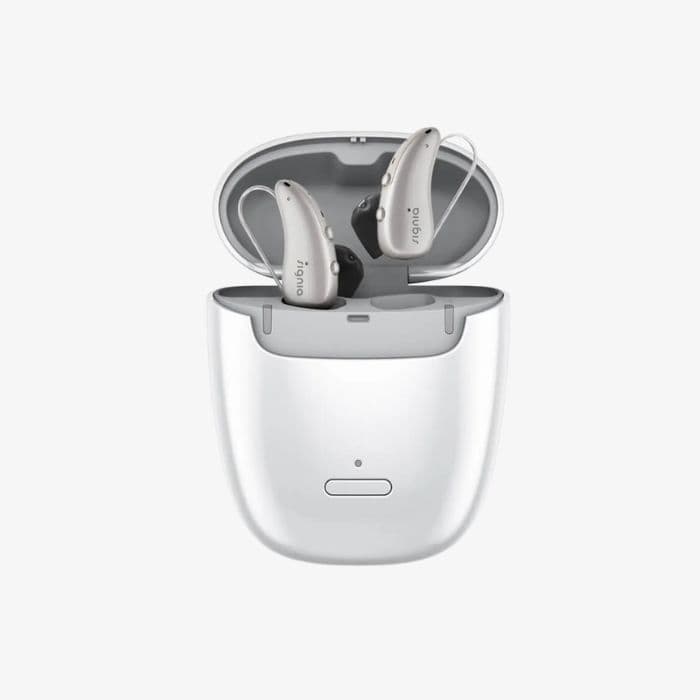
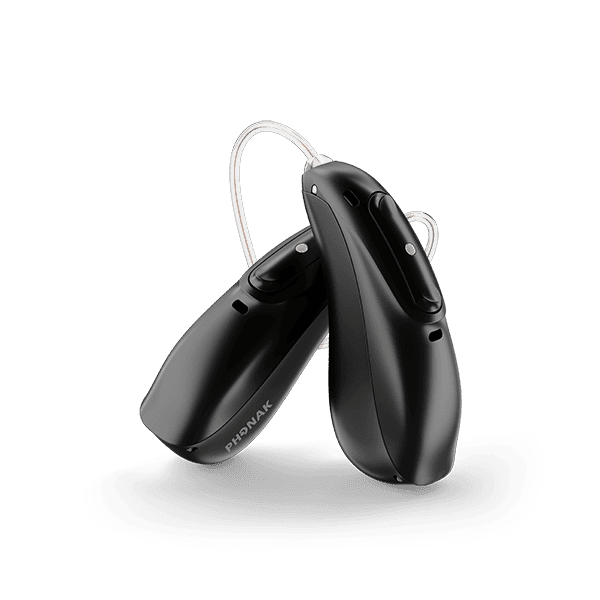
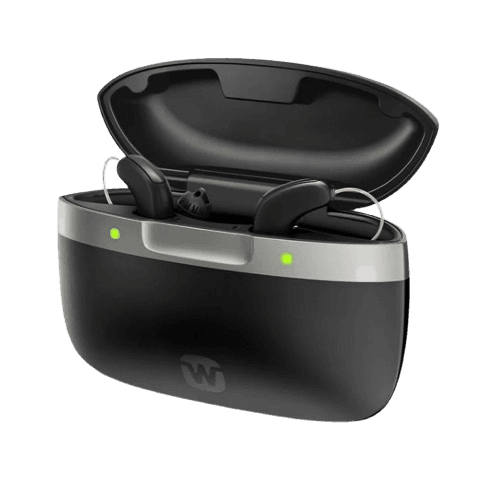
Buying in Punjab or Jammu? Get a CGHS-Ready Hearing Aid Locally
| Hearwell Clinic stocks digital, rechargeable hearing aids from Signia, Phonak, Widex, Oticon, Starkey, ReSound and Bernafon that meet the CGHS Annexure-I spec — plus the invoice, warranty documentation and fitting records your claim will need. 📞 Call Us: +91 8556086888 💬 WhatsApp: wa.me/+918556086888 📍 Visit: Your nearest Hearwell clinic — Jalandhar, Phagwara, Kapurthala, Ludhiana, Bathinda, Mohali, Patiala, Jammu or Yamuna Nagar. |